

How to maintain your hybrid car
If you’re buying a hybrid car for the first time, chances are you’ll be thinking about what’s going to be different from your petrol or diesel car. From refuelling to the way you drive, you’ll find there are a number of new things to get your head around as a hybrid owner. But what about when it comes to looking after your car?

Smoothly does it
There is no need to adapt your driving style just because you have switched from a regular petrol or diesel-powered model to a hybrid car. Our e:HEV Hybrid system delivers all the performance you could wish for in all situations, in addition to the fuel efficiency and low CO2 emissions that the clever technology is best known for.
Seamless driving
Get to know the controls and the driver’s information display. The latter can be adjusted to show fuel economy as you drive, which is a useful guide to how efficiently you’re operating the hybrid system. It can also display the power flow of the electric motor and petrol engine, as the car switches between Electric Drive, Hybrid Drive and Engine Drive, and how much energy is being regenerated for the high voltage battery.
Energy regeneration
As a hybrid coasts or slows down, its electric motor and an onboard generator work together to capture kinetic energy that in turn is returned to the battery. This is commonly known as regeneration mode. On Honda’s hybrid system, the level of reservation can be adjusted, just as it can with pure electric cars. Pulling at the left-hand paddle selector behind the steering wheel increases the regeneration effect, ranging from level one to level four. It can help reduce your use of the brakes, too, extending the life of brake pads and discs.

Econ: press for maximum efficiency
The button marked ECON makes your Honda e:HEV Hybrid as efficient as possible. It adjusts the way the engine responds to the accelerator and altering the performance of the climate control system.

Sport: press for maximum get-up-and-go
If you want maximum power and as much get-up-and-go as possible, selecting the Sport driving mode means the e:HEV Hybrid system is in its most responsive setting, giving effortless acceleration.

Using the Eco Drive Display
This pictures a vehicle icon within a circle, and the more smoothly and efficiently you drive, the less the icon will move within the circle. When you switch off the engine at the end of a journey, you’ll also be able to see your Drive Cycle Score, shown as leaf icons. The more leaves you grow on the display, the more efficiently you’re driving.

Selecting EV (Electric Vehicle) driving mode
One of the clever things about a hybrid car is that in certain operating conditions it can run on battery power alone - and you can choose to set the EV mode, by simply pressing the EV button near the gearshift button. It will operate up to speeds of around 25mph, depending on the model, the charge of the battery and the position of the accelerator pedal.
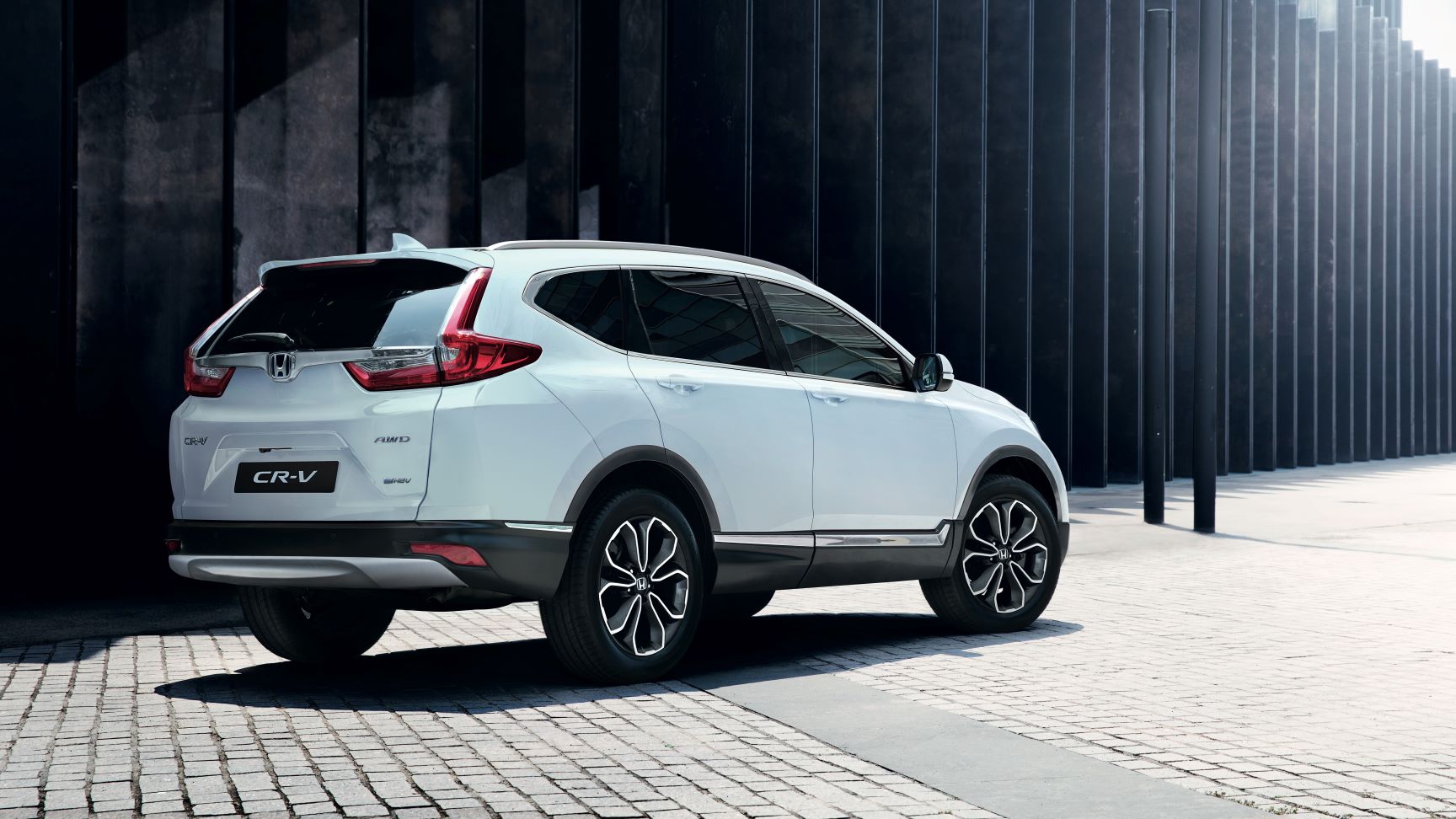
Maintaining a hybrid car
Your Honda lets you know if it needs a service. The Honda Service Reminder System, it can give advance warning, shown as a number of days in the driver’s information display, of when a service should be performed. It will also let you know which sort of service is next due; either an engine oil and filter change.
Five simple jobs you could do:
1.Check and top-up the windscreen wash fluid
2.Ensure the tyres’ air pressure is set to the recommended level
3.Check the engine oil using the dipstick
4.Observe the level of engine and inverter coolant
5.Make sure the brake fluid level is correct
1. How to check your hybrid’s windscreen wash fluid
Use the Honda Owner’s Guide to locate the reservoir for the car’s windscreen wash, which is usually in the engine bay. Open the cap and if you can’t see washer fluid, mix the appropriate strength of water and washer fluid for the weather conditions and carefully pour the solution into the reservoir, ensuring it doesn’t spill. Once full to the brim, close the lid and shut the bonnet securely.
2. Adjusting air pressure in the tyres
Honda recommends drivers check the air pressure of their car’s tyres at least once a month or before long trips. The correct pressure for your hybrid’s tyres will be displayed on a chart inside the driver’s door frame. Using an air pressure gauge, available at service stations or as inexpensive portable models, make sure that each tyre matches the recommended pressure listed on the chart, according to tyre size and how many passengers and how much luggage is being carried.
3. Checking the engine oil level of a hybrid car
Just like a regular petrol or diesel-powered car, a hybrid has a combustion engine and oil is at the heart of smooth running. For that reason, it’s recommended to check the oil level every time you fill the car with fuel.
Ideally this should be done several minutes after the engine has been switched off. The Honda Owner’s Guide will show the location of the dipstick, in the engine bay. Take a paper towel, remove the dipstick, and wipe the tip of the stick clean. Then reinsert it, remove it again and see that the oil level is between the minimum and maximum marked points.
4. Observe the level of engine and inverter coolant
Coolant is used to ensure that the engine and inverter maintain the current temperature in all operating conditions. As with the engine oil, you should check the coolant each time you fill your hybrid with fuel, ideally after the engine has been switched off for several minutes. The Honda Owner’s Manual will show the position of the engine coolant reserve tank and inverter coolant filler tank. Each will be marked with a minimum and maximum line on the side of the tank, and the coolant should be visible between these two points.
5. Make sure the brake fluid level is correct
As with the engine oil and coolant, you should check the level of brake fluid each time you fill your hybrid with fuel, once the engine has been switched off for several minutes. The Honda Owner’s Manual will show the location of the brake fluid reserve tank, which will be marked with a minimum and maximum line on the side of the tank. The brake fluid should be visible between these two points.

